

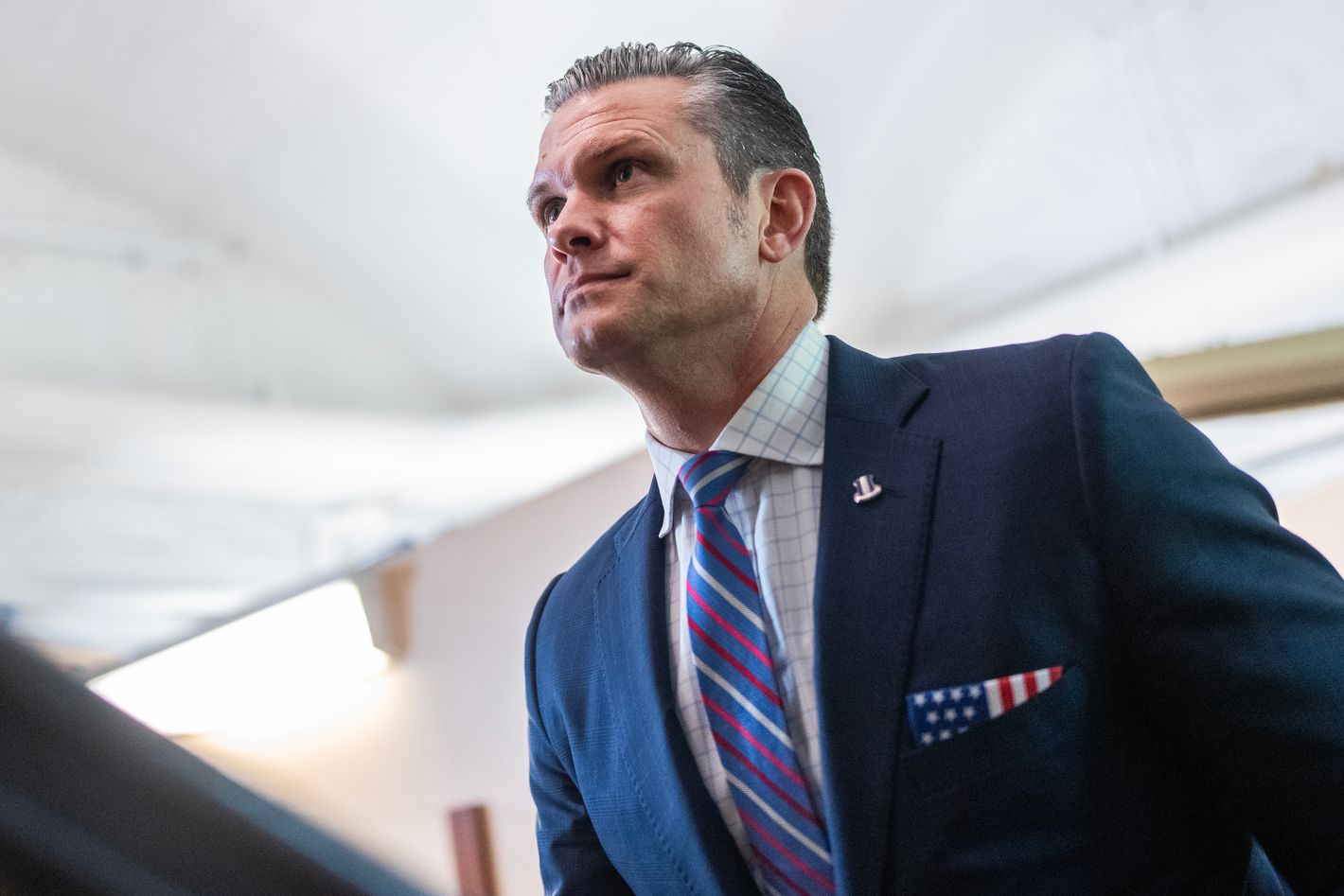
Pete Hegseth’s tenure as secretary of Defense has been perpetually marred by controversies, including his contentious confirmation hearing through months of allegations of mismanagement and the mishandling of classified information among other claims. The former Fox News anchor has once again found himself in the spotlight this week, following a Washington Post report that he ordered the killing of the passengers of a boat in the Caribbean Sea believed to be carrying drugs, resulting in two targeted strikes — first on the vessel’s crew and later on two survivors, which critics say amounts to a violation of international law. Hegseth has denounced the reports as “fabricated, inflammatory, and derogatory reporting,” but members of Congress on both sides of the aisle have expressed concern over the report and are demanding more information while the White House has shifted the narrative for the alleged act. Here’s what we know.
How did the White House first describe the strike?
On September 2, President Donald Trump wrote on social media that the U.S. military had “conducted a kinetic strike against positively identified Tren de Aragua Narcoterrorists in the SOUTHCOM area of responsibility” that morning.
“The strike occurred while the terrorists were at sea in International waters transporting illegal narcotics, heading to the United States. The strike resulted in 11 terrorists killed in action,” he wrote.
The White House accompanied the announcement with a video purporting to show the strike. In the black-and-white clip a boat can be seen traveling in the water as a missile strikes it directly, engulfing it in flames:
🇺🇸 ON VIDEO: U.S. Military Forces conducted a strike against Tren de Aragua Narcoterrorists. The strike occurred while the terrorists were at sea in International waters transporting illegal narcotics, heading to the U.S. The strike resulted in 11 terrorists killed in action. pic.twitter.com/iszHE0ttxQ
— The White House (@WhiteHouse) September 2, 2025
“Please let this serve as notice to anybody even thinking about bringing drugs into the United States of America. BEWARE!” Trump wrote.
What did the Washington Post report?
On Friday the Post published a staggering report alleging that after the federal government’s first strike on the alleged drug traffickers on September 2, Hegseth ordered SEAL Team Six members to kill everyone aboard the boat, leaving no survivors:
Defense Secretary Pete Hegseth gave a spoken directive, according to two people with direct knowledge of the operation. “The order was to kill everybody,” one of them said.
A missile screamed off the Trinidad coast, striking the vessel and igniting a blaze from bow to stern. For minutes, commanders watched the boat burning on a live drone feed. As the smoke cleared, they got a jolt: Two survivors were clinging to the smoldering wreck.
The Special Operations commander overseeing the Sept. 2 attack — the opening salvo in the Trump administration’s war on suspected drug traffickers in the Western Hemisphere — ordered a second strike to comply with Hegseth’s instructions, two people familiar with the matter said. The two men were blown apart in the water.
How has Hegseth responded?
On social media, Hegseth downplayed the Post’s reporting. “As usual, the fake news is delivering more fabricated, inflammatory, and derogatory reporting to discredit our incredible warriors fighting to protect the homeland,” he wrote.
He continued, “Our current operations in the Caribbean are lawful under both U.S. and international law, with all actions in compliance with the law of armed conflict — and approved by the best military and civilian lawyers, up and down the chain of command.”
On his personal account, Hegseth took a more pointed stance by sharing an AI-generated image of the children’s-book character Franklin armed with military weaponry:
For your Christmas wish list… pic.twitter.com/pLXzg20SaL
— Pete Hegseth (@PeteHegseth) December 1, 2025
“We have only just begun to kill narco-terrorists,” he wrote in another post.
Hegseth’s jokey post was later condemned by Kids Can Press, the publisher of the Franklin books:
— kidscanpress (@KidsCanPress) December 1, 2025
What is the White House’s version of events?
In the immediate aftermath of the Post’s report, the Trump administration accused the outlet of perpetuating inaccuracies. “We told the Washington Post that this entire narrative was false yesterday,” Pentagon spokesman Sean Parnell tweeted on Friday.
On Monday, the White House publicly acknowledged that the second strike took place but denied that it was Hegseth who delivered the order. White House press secretary Karoline Leavitt read a prepared statement on the September attack, suggesting that Admiral Frank Bradley, who then led the Joint Special Operations Command, was the one who made the final call on the strikes rather than Hegseth.
“With respect to the strikes in question on September 2, Secretary Hegseth authorized Admiral Bradley to conduct these kinetic strikes. Admiral Bradley worked well within his authority and the law, directing the engagement to ensure the boat was destroyed and the threat to the United Sates of America was eliminated,” she said.
After the White House indicated that Admiral Bradley was responsible for the September strikes, Hegseth issued a new social-media statement expressing support for the commander. “Let’s make one thing crystal clear: Admiral Mitch Bradley is an American hero, a true professional, and has my 100% support. I stand by him and the combat decisions he has made — on the September 2 mission and all others since,” he wrote.
Who is Frank Bradley?
Bradley is a Navy admiral with an extensive career. According to his official Navy biography, he joined the Navy SEALs in 1992 after graduating from the U.S. Naval Academy and was one of the first to deploy into Afghanistan in the aftermath of the September 11 attacks.
He has led special operations at multiple levels including serving as the commander of the Joint Special Operations Command at the time of the September strikes. Bradley has served as the commander of the U.S. Special Operations Command since October.
In interviews with the Washington Post, military officials expressed concerns that Bradley would be expected to take the fall for the operation following the White House’s latest framing of events:
“This is ‘protect Pete’ bulls—,” one military official, who, like others, spoke on the condition of anonymity to discuss internal conversations, told The Post.
Leavitt’s statement “left it up to interpretation” who was responsible for the second strike that killed the two survivors, a separate military official said, imploring the White House to provide clarity on the issue.
One official said of Leavitt’s statement, “It’s throwing us, the service members, under the bus.” Another person said some of Hegseth’s top civilian staff appeared deeply alarmed about the revelations and were contemplating whether to leave the administration.
Where does Trump stand?
Aboard Air Force One on Sunday reporters began to ask Trump about the Post’s Hegseth report, but the president quickly cut in: “I don’t know anything about it. He said he did not say that, and I believe him 100 percent,” Trump said.
A reporter then asked if Trump would be okay with the order if Hegseth had given it. He responded, “He said he didn’t do it, so I don’t have to make that decision.”
Reporter: Can you talk a little bit about the strikes and controversy around Hegseth—
Trump: I don’t know anything about it. He said he did not say that.
Reporter: You don’t know if there was a second strike to kill the two men
Trump: He said he didn’t do it
Reporter: Would… pic.twitter.com/JvxUvnaeQJ
— Acyn (@Acyn) November 30, 2025
But during the same gaggle, Trump appeared to suggest he wouldn’t have been in favor of that second strike. “We’ll look into it. But no, I wouldn’t have wanted that, not a second strike,” he said. “The first strike was very lethal, it was fine, and if there were two people around. But Pete said that didn’t happen. I have great confidence in him.”
Reporter: If there were a second strike that killed wounded people, would that be legal?
Trump: I don’t know that happened and Pete said he did not even know what people were talking about. I wouldn’t have wanted a second strike. The first strike was very lethal. It was fine. pic.twitter.com/UYikol8Tc7
— Acyn (@Acyn) November 30, 2025
When pressed on whether the second strike took place, Trump said, “I don’t know. I’m going to find out about it. But Pete said he did not order the death of those two men.”
How has Congress reacted?
Republican senator Roger Wicker and Democratic senator Jack Reed, the chairman and ranking member of the Senate Armed Services Committee, respectively, issued a joint statement vowing to conduct “vigorous oversight to determine the facts related to these circumstances.”
Republican chairman Mike Rogers and Democratic ranking member Adam Smith of the House Armed Services Committee put out a similar message, saying they are “taking bipartisan action to gather a full accounting of the operation in question.”
Other members of Congress went a step further, suggesting that the drug-boat strike could have serious legal implications. “Obviously, if that occurred, that would be very serious, and I agree that that would be an illegal act,” Republican representative Mike Turner said on NBC’s Meet the Press on Sunday, noting that Congress does not yet have information supporting that report.
Senator Tim Kaine, a Democrat, echoed that sentiment during an appearance on CBS’s Face the Nation the same day, saying the act would be a “clear violation of the DoD’s own laws of war” and “rises to the level of a war crime” if proven to be true.
But the U.S. military’s actions in the region do have its defenders in Congress. “The strikes in question are consistent with both the law of armed conflict and with the precedent set by our systematic targeting of terrorist operatives across the globe. I have full confidence in Admiral Bradley and his legal justification ordering these strikes,” Republican senator Tim Sheehy wrote on social media.
How many deaths have occurred from the U.S. military strikes?
According to a CNN timeline, the U.S. military has conducted at least 21 strikes from early September to mid-November in the Caribbean Sea and the Pacific. Eighty-three people have been killed in the strikes, and 22 boats have been destroyed. Per the outlet, there were three survivors from the strikes: Two were repatriated to their home countries of Ecuador and Colombia while a third is presumed dead following an unsuccessful search by the Mexican Navy.
More on Hegseth