With Warren Buffett just days away from ending his stellar 55-year stint as CEO of Berkshire Hathaway(NYSE: BRK.A)(NYSE: BRK.B) and passing the torch to Greg Abel, most investors are understandably asking questions. What does this change mean for Berkshire’s future, and what might that in turn mean for the company’s stock?
Answer: Nobody really knows for sure. There are reasonable, educated likelihoods though, most of which can be placed in one of two categories. There’s the qualitative change in how this complicated conglomerate is steered. And there are the resulting quantitative changes that will directly impact shareholders’ value and performance.
Here’s a closer look at the most likely differences we’ll plainly see in both categories within the next five years.
If you know anything about Warren Buffett, then you almost certainly know he’s a fan of value stocks of simple, straightforward consumer-facing businesses. Coca-Cola is a long-held top Berkshire holding, for instance. Conversely, Buffett’s never been a big fan of technology stocks, explaining he doesn’t like to own businesses he doesn’t understand.
Incoming CEO Greg Abel may feel differently, though. In fact, even with Buffett still at the helm, Berkshire Hathaway has recently eased its way into the technology arena by stepping into stakes in Alphabet and Amazon — positions that would have been unthinkable just a few years ago.
The conglomerate isn’t going to be taking any fliers on any hyper-aggressive tech names anytime soon. But don’t be surprised to see more exposure to some of the market’s steadier technology companies.
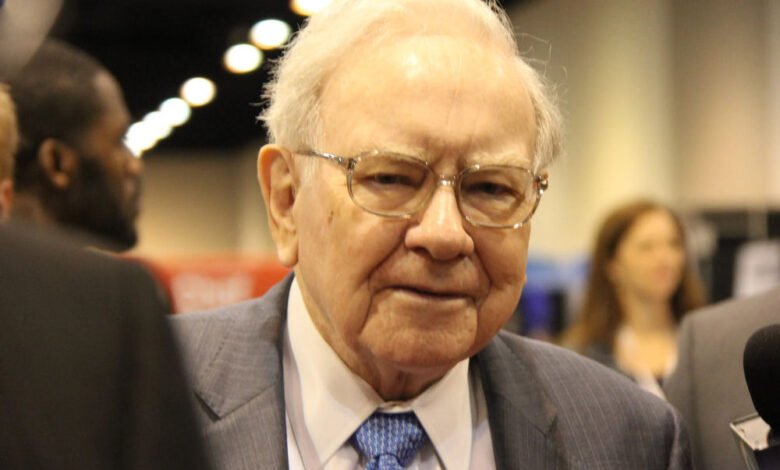
Image source: The Motley Fool.
That said, also don’t be surprised to see individual stock holdings de-emphasized in the foreseeable future in favor of more privately owned businesses. Berkshire Hathaway’s stock picks are regularly dissected. But these equity positions only account for about one-third of Berkshire’s total value.
Another third is made up of privately held companies like railroad BNSF, Geico Insurance, Duracell batteries, flooring company Shaw, Pilot Travel Centers, and more. These are reliable cash cows even if they’re not the strongest of growth engines. And in an environment where equity valuations may remain at lofty levels for the indefinite future, Abel and his team may have little choice but to hunt for opportunities outside of the publicly traded arena.
Finally, whereas Buffett famously let all the heads of Berkshire’s different businesses operate with little meddling from Buffett himself, Greg Abel is expected to take a more involved, less passive approach.
None of these changes make Berkshire Hathaway better or worse. Just different. Nevertheless, reasonable predictions about the impact on shareholders can be made.
So what might all of these probable changes mean in practical terms for current and would-be shareholders over the course of the coming five years? Take any such predictions with a BIG grain of salt.
As of the latest look, Berkshire Hathaway’s market value stood at $1.1 billion. Even if he does so differently, assuming Abel maintains Buffett’s overall track record of success (which is a reasonable assumption), Berkshire’s market cap could reach $2 trillion by the end of 2030. That’s an average annualized gain of a little more than 12% per year, more or less in line with the stock’s long-term market-beating average.
There’s something else shareholders are apt to start seeing from Berkshire over the course of the coming five years. We’re already somewhat seeing it, in fact, if Buffett’s hesitation to deploy $382 billion worth of idle cash is any indication. That’s slower growth, thanks to a combination of financially constrained consumers and Berkshire’s sheer size.
As Buffett himself warned in last month’s farewell letter to shareholders, “because of Berkshire’s size and because of market levels, ideas are few,” although he adds “but not zero.” Still, just to manage investors’ expectations, he goes on to make clear that “our size takes its toll.”
To this end, finally, while Berkshire Hathaway has never paid a dividend under Buffett’s tenure and rarely repurchases much of its own outstanding stock (and hasn’t bought back any shares since early last year), don’t be surprised if dividends and buybacks become a reliable component of the company’s total return to shareholders.
Not a major component, mind you. But it’s at least one that provides the most value from all the cash that’s likely to flow if and when the conglomerate continues to move away from equity growth investments and toward more privately owned cash-generating businesses.
The overarching question remains, of course. Is Berkshire a buy at this somewhat uncertain time? Yes, it is.
It will be different than before to be sure. Not only did Buffett have an amazing instinct for knowing which stocks were truly undervalued, and when, but his presence added a touch of magic to the matter. Greg Abel’s got some big shoes to fill, and he’s going to do so differently than Buffett would.
For all the impending differences described above, however, five years from now Berkshire is still going to look more like it does right now than not. Namely, it will first and foremost remain an incredibly lucrative insurance business.
As Buffett himself plainly put it back in his 2009 letter to Berkshire shareholders, “This collect-now, pay-later model [insurance] leaves us holding large sums — money we call “float” — that will eventually go to others. Meanwhile, we get to invest this float for Berkshire’s benefit… This combination allows us to enjoy the use of free money — and, better yet, get paid for holding it.”
Any changes from here, therefore, will ultimately only be minor tweaks in how this insurance business operates. Greg Abel fully understands this arrangement is a huge key to the company’s magnificent long-term performance.
Before you buy stock in Berkshire Hathaway, consider this:
The Motley Fool Stock Advisor analyst team just identified what they believe are the 10 best stocks for investors to buy now… and Berkshire Hathaway wasn’t one of them. The 10 stocks that made the cut could produce monster returns in the coming years.
Consider when Netflix made this list on December 17, 2004… if you invested $1,000 at the time of our recommendation, you’d have $509,039!* Or when Nvidia made this list on April 15, 2005… if you invested $1,000 at the time of our recommendation, you’d have $1,109,506!*
Now, it’s worth noting Stock Advisor’s total average return is 972% — a market-crushing outperformance compared to 193% for the S&P 500. Don’t miss the latest top 10 list, available with Stock Advisor, and join an investing community built by individual investors for individual investors.
James Brumley has positions in Alphabet and Coca-Cola. The Motley Fool has positions in and recommends Alphabet, Amazon, and Berkshire Hathaway. The Motley Fool has a disclosure policy.