

Posted on: December 20, 2025, 09:49h.
Last updated on: December 20, 2025, 09:49h.

- The Thailand-Cambodia conflict reportedly has innocent civilians in its crossfire
- Thailand is targeting suspected scam centers where trafficked persons work
Thousands of people suspected to be human trafficking victims who have been forced to work in slave-like conditions in Cambodia along the Thailand border have been caught in the crossfire of the ongoing conflict.
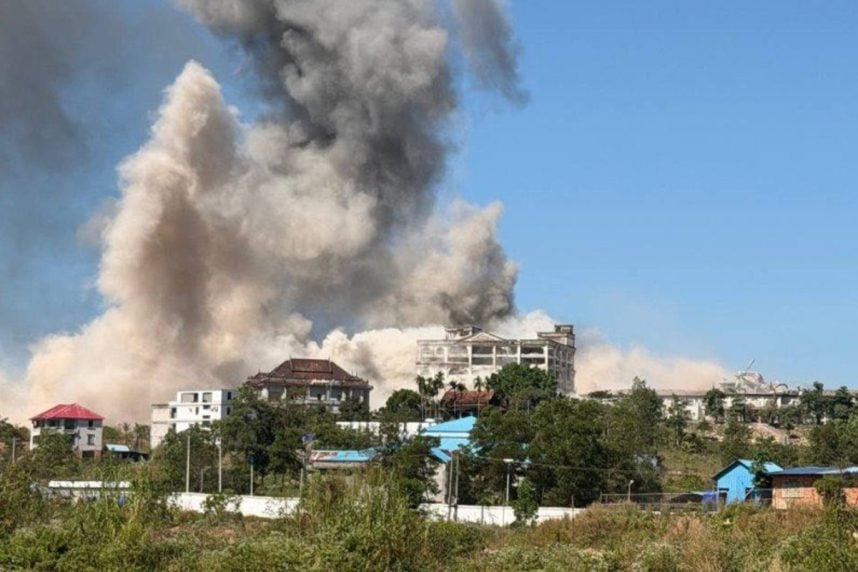
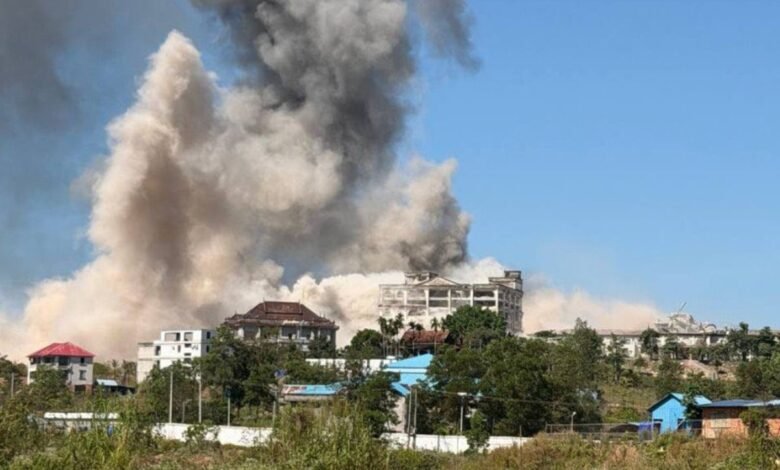
Thailand has targeted border casinos in Cambodia that the Thai army claims have been retrofitted to serve as arsenals and firing positions for the Royal Cambodian Armed Forces. Thailand has bombed or struck at least four casinos in Cambodia just across the border.
The territorial dispute, which has endured for more than a century, escalated into armed conflict earlier this year after Thai soldiers in February prevented Cambodian tourists from singing their national anthem at the Prasat Ta Muen Thom, an ancient temple along the border. The incident resulted in the death of a Cambodian soldier.
A leaked phone call between Paetongtarn Shinawatra, then the prime minister of Thailand, and Hun Sen, the most powerful person in Cambodia, recorded the prime minister blaming her own army for the February incident. The informal conversation that was made public led to Shinawatra’s impeachment and intensified tensions between the two sides.
Casino Scam Centers
While there are many casinos on the Cambodia side of the Thai-Cambodia border, the United Nations says the casinos have also served as scam centers where an estimated 100,000 victims of human trafficking have been forced to perpetrate online scams in what’s believed to be a multibillion-dollar industry.
Amnesty International, an international human rights organization based in London, says the Cambodian government has allowed slavery and torture to “flourish inside hellish scamming compounds.” The organization has managed to visit 52 scamming compounds in Cambodia, with many of the buildings previously serving as casinos and hotels that were repurposed by criminal gangs from China.
Most victims had been lured to Cambodia by deceptive job advertisements posted on social media sites such as Facebook and Instagram. After being trafficked, survivors said they were forced to contact people using social media platforms and begin conversations aimed at defrauding them. These included fake romances or investment opportunities, selling products that would never be delivered, or building trust with victims before financially exploiting them, known as ‘pig-butchering,’” Amnesty reports.
“Our findings reveal a pattern of state failures that have allowed criminality to flourish and raise questions about the government’s motivations,” said Amnesty International’s Regional Research Director Montse Ferrer.
UN Advisory
The United Nations confirmed this week that civilians and human trafficking victims in Cambodia remain at risk, and some have likely been killed in the Thailand-Cambodia conflict.
Casino complexes and suspected scam centers in Cambodia have reportedly been hit,” the UN advised.
“I am alarmed by reports that areas around villages and cultural sites are being struck by fighter jets, drones, and artillery. “Under international humanitarian law, it is very clear that protection of civilians and civilian infrastructure is paramount,” added Volker Türk, the UN’s high commissioner for human rights.
Source link