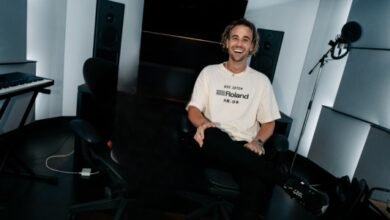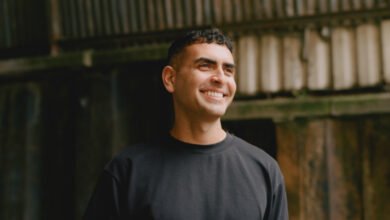

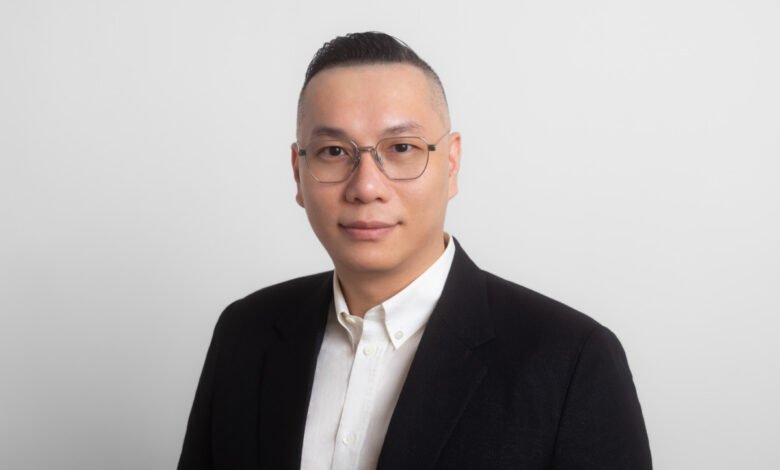

Before he was producing EDC Korea alongside Insomniac or packing out Brooklyn’s biggest venues for Lunar New Year, Luffy Huang was a singer and TV host in Asia — and an expat who knew what it felt like to be far from home on the holidays that mattered most. That feeling became the foundation for One Pulse Group, the first Asian-led entertainment company in the U.S. dedicated to dance music, and a growing global operation that now spans New York, Los Angeles, Seoul, Dubai, and beyond.
Through flagship properties like Spring Festival, S2O, and Krazy Super Concert, Huang has carved out a lane that didn’t exist before him; fusing cultural heritage with world-class electronic music production and proving that authenticity and mainstream appeal aren’t at odds. They amplify each other.
We sat down with the One Pulse Group founder and CEO to talk about the origin of the Pulse philosophy, what it took to bring EDC back to Korea, navigating cultural representation on the big stage, and where the brand is headed next.

—
For people who don’t know you yet; you started your career in Asia as a singer and TV host before becoming a major concert producer. What was the moment that made you say, “I need to bring this energy to the United States”?
It really began during my time living in Asia, when I experienced firsthand how isolating holidays can feel as an expat. Celebrations that are meant to bring people together can actually amplify the feeling of being far from home. That realization stayed with me.
When I moved to the United States, I saw an opportunity to recreate that sense of belonging through live events. That’s why many of One Pulse Group’s productions are centered around major Asian holidays, like Spring Festival. Our slogan, One Pulse, One World, reflects that mission. We’re not just producing high-quality, spectacular shows — we’re creating cultural bridges and shared experiences.
At its core, One Pulse Group is about giving people a home away from home, especially during the moments when connection matters most.
Your company tagline is “One Pulse, One World.” You’ve said the name comes from the feeling of thousands of fans sharing the same heartbeat at an EDM event. Can you take us deeper into that philosophy and how it drives every decision you make?
The name Pulse comes from a very specific feeling — that moment at a live show when thousands of people are moving in sync, sharing the same rhythm, the same energy, almost the same heartbeat. If you’ve ever stood in the middle of an EDM crowd when the beat drops, you know exactly what I mean. It’s powerful, unifying, and unforgettable.
But for me, that pulse represents something bigger than music. It represents connection. In a world that can often feel divided — culturally, geographically, even digitally — live events remind us that we’re more alike than we are different. When the music starts, barriers fall away.
That philosophy drives every decision we make at One Pulse Group. From the artists we book, to the holidays we celebrate, to the cities we choose — we ask ourselves one question: will this bring people together? “One Pulse, One World” isn’t just a tagline; it’s our operating principle. We design experiences that create shared moments, because shared moments create community — and community is what lasts long after the lights go down.
One Pulse Group is recognized as the first Asian-led entertainment company in the U.S. focused on dance music. What did that landscape look like when you launched in 2015, and what walls did you have to break down early on?
When we launched in 2015, the landscape was very different. There were incredible dance music promoters in the U.S., but there wasn’t a platform specifically amplifying Asian artists and culturally rooted experiences within that space. We saw both a gap and an opportunity to serve a community that hadn’t yet been fully represented.
We were fortunate that the idea resonated quickly. Expats and international students were looking for connection — especially around important cultural holidays — and from the beginning, we saw strong support.
At the same time, being first meant we had to be creative. We couldn’t rely on traditional marketing approaches alone. We had to find authentic ways to communicate cultural meaning, tell stories, and connect with audiences who may not have been familiar with the traditions we were celebrating. That pushed us to be more thoughtful and innovative with our content, our messaging, and the way we engaged online. In many ways, it allowed us to lean into something we’re truly passionate about — sharing culture through storytelling, not just promotion.
There was also an educational component. We often found ourselves explaining the cultural significance behind certain holidays or programming choices to local partners and teams. What stood out was the openness and enthusiasm we received in return. Those conversations — sometimes even the funny, lighthearted misunderstandings — ultimately brought everyone closer together.
Looking back, breaking down walls wasn’t about resistance. It was about creativity, communication, and building bridges. And that mindset continues to shape how we grow today.
You’ve talked about some of your early visions for incorporating Asian entertainment not working out as planned in the U.S. due to different rules and regulations. Can you give us a specific example of something that went wrong and what you learned from it?
A: Absolutely. One early lesson came when we tried to replicate certain production elements that are very common in Asia — particularly around stage design and interactive audience components. In some Asian markets, there’s more flexibility in how venues operate and how production is executed. When we attempted something similar in the U.S., we quickly realized that the regulatory environment — from fire codes to union rules to permitting requirements — was very different.
There wasn’t anything dramatic that “went wrong,” but we did have moments where we had to pivot quickly because an idea that worked overseas simply wasn’t feasible here. It was a humbling experience.
What I learned was that innovation isn’t about copying and pasting success from one market to another. It’s about understanding the framework you’re operating in and designing within it. The U.S. has high standards when it comes to safety and compliance, and ultimately, that protects both the audience and the integrity of the event.
That experience made us more disciplined. We built stronger relationships with local production teams, became more proactive in understanding regulations, and started designing concepts specifically for the U.S. market rather than adapting them at the last minute.
Being first meant we had to learn fast — but those early adjustments made us a much stronger company in the long run.
Spring Festival is now entering its fourth year. After three successful years at Avant Gardner, this year it moves to The Brooklyn Hangar and continues to grow in scale. Why was Lunar New Year the very first cultural event you chose to bring to New York, and what does it mean to you personally?
Lunar New Year felt like the most natural place to begin because it’s more than a holiday — it’s about reunion, renewal, and hope. Across so many Asian cultures, it’s the moment when families come together, reflect on the past year, and step into the new one with intention.
Lunar New Year was one of the times I felt most aware of being away from home. That feeling stayed with me. So when we launched One Pulse Group, I knew that if we were going to build something meaningful, we had to start there.
The first year was about creating a space where people could celebrate in a way that felt authentic but also modern — blending tradition with dance music culture. Seeing it grow over three years at Avant Gardner and now expand to The Brooklyn Hangar is incredibly emotional for me. For me, United States is home now too and the Spring Festival shows that this isn’t just an event; it’s become a tradition in its own right.
Personally, it represents everything Pulse stands for: honoring heritage while building community in a new environment. It’s our clearest expression of “One Pulse, One World” — celebrating culture while inviting everyone to be part of it.
You incorporate traditional lion dances into Spring Festival. How do you make sure those cultural elements feel authentic and respectful rather than performative — especially in a rave setting?
That’s something we approach with a great deal of care and intention. The lion dance isn’t just a visual moment for us — it carries deep cultural meaning. It represents good fortune, renewal, and protection, especially as we enter a new year.
We work with experienced cultural performers who understand the history and symbolism behind the tradition. The performance is thoughtfully placed within the event, not treated as a gimmick or an intermission. It’s part of the narrative of the night.
For me, authenticity comes down to intention and respect. We’re not using tradition as a backdrop — we’re honoring it. At the same time, we’re presenting it in a modern environment that reflects who our audience is today. Culture evolves, and it can coexist beautifully with contemporary music when handled thoughtfully.
Rave culture is rooted in unity and shared energy. When you approach heritage with sincerity, it doesn’t feel performative — it feels powerful.
You’ve talked about one of your biggest daily challenges being how to represent Asian culture authentically while making events appeal to a diverse audience. Can you walk us through how you navigate that?
I navigate that balance by starting with intention. Spring Festival is a great example. At its core, it’s a Lunar New Year celebration — rooted in reunion, renewal, and hope. That foundation never changes. We honor the tradition first, and then we design the experience around it in a way that feels natural within the dance music space.
Once that authenticity is clear, the event becomes welcoming rather than exclusive. People don’t feel like outsiders — they feel invited to learn, celebrate, and participate. That’s been the blueprint.
We applied that same philosophy as we expanded. With S2O in the U.S., we introduced a water festival rooted in Thailand’s Songkran, honoring the spirit of cleansing and new beginnings while adapting the format for audiences in New York and Los Angeles. Through One Pulse Group, we’ve produced Krazy Super Concert to spotlight Asian pop culture on a global stage, expanded internationally into markets like Dubai, created I LOVE YOU DAY on 5/20 inspired by the Chinese expression of love, and launched Winter Festival around the solstice — a moment of reflection and transition that resonates across cultures.
Each event has a specific cultural origin, but the emotions behind them — renewal, love, celebration, unity — are universal.
For me, it’s not about making culture “fit” a diverse audience. It’s about presenting it with confidence and context. When you lead with authenticity, people respond with curiosity and respect. And that’s how you build something that’s both culturally rooted and globally inclusive.
You partnered with Insomniac to bring EDC Korea back to Incheon in April 2025 after a five-year hiatus. How did that partnership come about, and what was it like working with Pasquale Rotella’s team to make it happen?
EDC holds a very special place in my life. I actually met my wife at EDC Las Vegas — that’s where our story began. So on a personal level, the festival represents love, possibility, and the transformative power of music.
When the opportunity came to help bring EDC Korea back after a five-year hiatus, it felt incredibly meaningful. With my background and relationships in Korea, I saw a chance to contribute something significant — not just to the market, but to a festival that has shaped my own journey.
Working with Pasquale Rotella and the Insomniac team has been a true collaboration. Pasquale has built something extraordinary with EDC — it’s not just an event, it’s a universe. What aligns naturally between our companies is a shared commitment to quality, production excellence, and community. We both believe that details matter. From stage design to artist curation to fan experience, nothing is accidental.
There’s also a shared understanding that festivals are emotional experiences. They’re not just shows — they’re milestones in people’s lives. That alignment made the partnership feel organic.
Bringing EDC back to Incheon isn’t just about reviving a brand. It’s about reigniting a community — and for me personally, it feels like coming full circle.
You’ve said you were deeply moved watching Korean fans experience an American rave production for the first time at EDC Korea. Can you describe that moment and what it confirmed for you about your mission?
There was a moment on the first night when I stepped back and saw tens of thousands of fans filling the grounds at Inspire Entertainment Resort in Incheon — completely immersed in the experience. The scale was massive, but what moved me most was the energy.
For many in the crowd, this was their first time experiencing an American-scale rave production of that magnitude. And the response was incredible. The passion, the unity, the emotional release — it felt just as powerful as anything you’d experience at EDC Las Vegas.
All the months of planning, the coordination across countries, the long nights — in that moment, it all felt worth it.
That experience confirmed something for me: when you invest in quality and lead with authenticity, the community will rise to meet you. And we’re excited to build on that momentum with EDC Korea 2026 on October 3–4, continuing to elevate the experience even further.
Your mission has evolved from “bringing the East to the West” to now also “bringing the West to the East” through and partnering with EDC Korea. How does that two-way exchange change the way you think about programming and curation?
Being global was always in my heart. Even when we started with the mission of bringing the East to the West, that wasn’t meant to be a one-directional journey. It was the first chapter.
As Pulse grew, it became clear that culture isn’t something you export — it’s something you exchange. Expanding into markets across Asia, producing shows throughout the region, and bringing experiences to places like Dubai reinforced that vision. Every market has its own identity, its own rhythm. The opportunity is to connect those rhythms without losing their individuality.
Partnering on EDC Korea represents the “West to East” chapter, but it’s really part of a larger philosophy: build platforms that move fluidly across borders. That changes how we think about programming. We’re no longer curating for one audience in one country. We’re thinking globally — blending international headliners with regional talent, understanding cultural context, and designing experiences that resonate locally while feeling world-class.
It’s not about shifting directions. It’s about expanding the circle.
From the beginning, “One Pulse, One World” wasn’t just a slogan. It was the long-term vision. Now we’re simply living it at a larger scale.
You brought S2O to Brooklyn Mirage for its U.S. debut. What made New York the right city for that, what was the reaction, and what’s next for S20?
In 2024, New York was very intentional — especially launching during Labor Day Weekend. Historically, that weekend has been significant for dance music in the city, but in recent years, there’s also been some hesitation from fans due to past event disruptions and uncertainty.
We saw an opportunity not just to introduce S2O, but to restore confidence.
Bringing S2O to Brooklyn Mirage over Labor Day Weekend was about more than a debut. It was about delivering an experience people could trust — from production quality to operations to artist lineup. We knew that if we were going to step into that space, it had to be done at the highest level. People deserve consistency and transparency.
What made it special was that it wasn’t just another festival. It was a new sensory experience — rooted in Songkran, the Thai New Year — blending culture, water elements, and high-caliber electronic music production. It gave New Yorkers something fresh, but also something dependable.
The response validated that approach. Fans showed up with curiosity, and they left with confidence.
Expanding to Los Angeles at BMO Stadium & Festival Grounds in September 2025 solidified S2O USA as more than a one-off moment. Now we’re focused on strengthening both coasts and thoughtfully exploring additional cities.
There’s definitely more ahead — we just like to move with intention.
And if people want to stay close to what’s next, they can follow @1PulseEvents and @S2OAmerica. We tend to let the community know first.
You’ve booked everyone from Marshmello and ILLENIUM to Alan Walker and KSHMR. You’ve also mentioned you intentionally book artists with Asian heritage like Gryffin, ARMNHMR, and JVNA. How do you approach building a lineup that serves both cultural representation and mainstream appeal?
Building a lineup is about understanding energy and audience psychology.
When we book mainstream headliners like Marshmello, ILLENIUM, Alan Walker, and KSHMR, we’re bringing in artists who are genuinely loved across cultures. Their fanbases are incredibly diverse. These aren’t “Western” artists for one demographic — they’re global favorites. Music at that level transcends background.
At the same time, representation matters. Intentionally spotlighting artists of Asian heritage like Gryffin, ARMNHMR, and JVNA is about visibility and inclusion. It sends a message that the main stage reflects the diversity of the community in front of it.
But we never separate those two ideas. Every artist we book earns their place because of talent, performance quality, and connection with fans. The goal isn’t to divide the lineup into categories — it’s to curate something cohesive and powerful.
When you get it right, you see it in the crowd. Different cultures, different languages, all reacting to the same drop at the same time. That’s the real philosophy behind our bookings: serve the global audience while reflecting the global reality.
Mainstream appeal and cultural representation aren’t competing goals. They amplify each other.
With Krazy Super Concert on the K-pop side and Spring Festival on the EDM side, you sit at a unique intersection of two massive global movements. Where do you see K-pop and EDM overlapping, and is there a world where they merge even further?
K-pop and EDM actually have more in common than people think — but the fans often express it differently, and that’s what makes it fun.
K-pop fans tend to be incredibly detail-oriented and deeply invested. They love storytelling, choreography, visuals, and the emotional journey of an artist. There’s a precision and passion there that’s really powerful.
EDM fans, on the other hand, are often there for release — the drop, the collective energy, the freedom of the moment. It’s less about watching and more about feeling.
But when you look closer, both groups are driven by intensity. They care deeply. They travel. They build community online and offline. They memorize lyrics or wait for that one drop. It’s devotion — just expressed differently.
Musically, the worlds are already overlapping. K-pop incorporates heavy electronic production and festival-style builds. EDM events have become more cinematic and performance-driven. The lines are blurring naturally.
I absolutely see a future where the two merge even further — not by forcing genres together, but by creating experiences that honor both personalities. Imagine the storytelling and visuals of K-pop combined with the immersive energy of an EDM festival. That intersection is exciting.
At the end of the day, both communities want the same thing: connection, emotion, and something unforgettable. They just show it in their own unique ways — and that diversity is what makes the culture so dynamic.
You’ve said that seeing more Asian American artists booked at festivals elevates the whole community. Where do you think the dance music industry is right now in terms of Asian representation, and where does it still need to go?
I think we’re in a very encouraging phase — but there’s still more work to do.
In recent years, we’ve seen more Asian and Asian American artists gain visibility, particularly in melodic and emotionally driven sub-genres of dance music. There’s a strong creative footprint there — the storytelling, the musicality, the emotional build. It’s been inspiring to watch.
At the same time, I’d love to see that representation expand across every sub-genre — house, techno, hardstyle, drum & bass, experimental sounds. The talent absolutely exists. It just needs continued opportunity and exposure.
What excites me most is seeing newcomers come forward. We constantly have young DJs and producers reaching out, saying they attended one of our events and thought, “One day, I want to be on that stage.” That’s incredibly powerful. When someone can see themselves in that space, it changes their trajectory.
That’s part of why we’ve hosted community initiatives like DJ contests and emerging artist platforms — and we plan to continue doing more in the future. It’s not just about booking established names. It’s about building a pipeline and creating real access.
Representation isn’t a trend — it’s a long-term commitment. And when we invest in the next generation, the entire industry benefits.
What’s the hardest thing about producing culturally rooted events in the United States that people on the outside might not understand?
I wouldn’t describe it as “hard” — I’d describe it as intentional.
What people on the outside may not see is how much thought and care goes into getting every detail right. When you’re producing culturally rooted events, you’re not just organizing a show — you’re representing heritage, history, and community. That responsibility matters to us.
There’s also a balance we’re always mindful of. We want to stay authentic to the culture we’re celebrating while making the event welcoming and accessible to a diverse audience. In today’s environment, that requires awareness. You have to be thoughtful about messaging, symbolism, and storytelling — making sure it’s respectful without diluting its meaning.
But I see that as a privilege, not a challenge.
More than ever, people are looking for spaces that feel unifying. Our goal is to create environments where culture becomes a bridge, not a boundary. Where people can celebrate their roots confidently, and others can participate with curiosity and respect.
At the end of the day, we stay focused on community. If we lead with sincerity and intention, everything else follows.
You’ve mentioned that a Kim Woo-bin fan meeting in 2013 — seeing the happy smiles on fans’ faces — was the moment you knew you were doing the right thing. How does that memory still fuel you today when the stakes and the stages have gotten so much bigger?
That fan meeting in 2013 was small compared to what we produce today — but emotionally, it was huge.
I remember standing there and watching the expressions on fans’ faces. For many of them, it wasn’t just about seeing Kim Woo-bin. It was about feeling seen, feeling connected, feeling understood. That kind of joy is very pure. There’s no production scale that can replace that.
As the stages have gotten bigger — from theaters to arenas to festivals with tens of thousands of people — I try to hold onto that original feeling. The technology evolves. The budgets grow. The logistics become more complex. But the purpose stays the same.
At its core, what we do is create moments that matter to people.
Whenever I’m overwhelmed by the scale or the pressure, I remind myself of that room in 2013. If we can create even one moment in a crowd of 100,000+ that makes someone feel the way those fans felt that day, then we’re doing it right.
The stakes may be higher now — but the mission hasn’t changed. It’s still about smiles, connection, and memories that last.
Your team and partners are spread across multiple countries and time zones. You’ve said you work Asia hours even though you live in the U.S. What does a typical day look like for you, and how do you maintain that grind without burning out?
There’s definitely a lot of coffee involved. (Laughs.)
Because our team and partners span across Asia, the Middle East, and the U.S., my schedule doesn’t follow a traditional time zone. Some mornings start with late-night calls to Asia, and evenings can stretch depending on what market we’re coordinating with. It’s fluid — and it requires discipline.
For me, it comes down to work ethic and empathy. When you’re operating globally, communication has to be clear and upfront. Small misunderstandings can become big ones across time zones, so I try to lead with transparency and respect.
Empathy is equally important. Everyone on our team is balancing different cultural contexts, pressures, and schedules. Understanding that — and making sure people feel supported — is what keeps things sustainable.
We call ourselves the Pulse Family, and that’s something I take seriously. It’s not just a phrase. We treat each other with respect, and we genuinely want to see one another succeed. When people feel valued, they don’t just work harder — they work with heart.
And honestly, I’m incredibly grateful to our team. None of this scale is possible without their commitment and passion. The hours can be long, but knowing you’re building something meaningful together makes it worth it.
That shared belief is what keeps the rhythm going.
You’ve spoken to the Asian Hustle Network about resilience and hustle. What advice would you give to young Asian American entrepreneurs — especially those trying to break into the live music or entertainment industry?
First, I would say: don’t wait for permission.
When I started, there wasn’t a clear blueprint for what we were building. There weren’t many examples of Asian-led companies operating at scale in dance music. If I had waited for validation, I might still be waiting.
Second, understand that resilience isn’t loud. It’s consistent. The entertainment industry can look glamorous from the outside, but behind the scenes it’s logistics, rejection, long hours, and constant problem-solving. The people who last are the ones who can absorb setbacks without losing momentum.
I’d also encourage young Asian American entrepreneurs to embrace their cultural identity rather than dilute it. Your perspective is an advantage. Your lived experience is a differentiator. The goal isn’t to fit into the industry — it’s to expand it.
At the same time, hustle alone isn’t enough. Relationships matter. Reputation matters. Treat people well. The live music world is smaller than it looks, and integrity compounds over time.
And finally, think globally. We live in a borderless era. If you’re building something meaningful, don’t limit your vision to one market.
The industry needs new voices. If you’re passionate and willing to do the work, there’s space for you — and if there isn’t, build the stage yourself.
You’ve said your dream is for One Pulse Group to be mentioned alongside EDC, Tomorrowland, and Ultra as a globally recognized festival brand — specifically as the leader in Asian and multicultural event production. What milestones do you need to hit to get there?
(Laughs.) Aren’t we already there?
In all seriousness, it’s an ambitious dream — and I say that with both confidence and humility. We’re proud of what we’ve built, but brands like EDC, Tomorrowland, and Ultra earned their status over decades of consistency and innovation. That level of legacy takes time.
For Pulse to stand alongside names like that, we have to keep raising our standard. It’s not just about scale — it’s about consistency. Delivering world-class production across multiple markets. Building recurring flagship events that become part of the cultural calendar. Expanding internationally while maintaining quality control.
We also have to continue shaping culture, not just participating in it. That means developing talent, investing in community platforms, and setting the benchmark for how Asian and multicultural events are presented on a global stage.
But at the end of the day, legacy isn’t something you declare. It’s something the audience decides.
If we continue to lead with authenticity, elevate production, and build meaningful experiences that last for generations, then one day the comparison won’t feel aspirational — it’ll feel natural.
And until then, we keep working.
You’ve teased working with another big brand in the U.S. beyond Insomniac, and expanding S2O to another major American city. Without spoiling anything — what should fans be watching for from Pulse in the next 12 months?
I’ll say this — if you think the last year was active, the next 12 months will be even more interesting.
We’re very intentional about the brands we align with. Any partnership we pursue has to match our standards in production quality, cultural respect, and long-term vision. We’re not interested in one-off headlines — we’re building platforms.
There are definitely conversations happening. Some of them are further along than others. But we move quietly until everything is solid.
As for S2O, the response in New York and Los Angeles has given us strong confidence. Expanding to another major U.S. city is something we’re seriously evaluating. It has to be the right market, the right timing, and the right infrastructure. When we step in, we want to elevate — not experiment.
So what should fans watch for?
Strategic expansion. Bigger collaborations. And experiences that feel familiar to our community, but on a scale they haven’t seen from us before.
That’s all I can say for now.
If we zoom all the way out beyond the festivals, the lineups, the business what do you ultimately want people to take away from a Pulse Events experience? When someone walks out of Spring Festival or EDC Korea, what do you hope they carry with them?
If we zoom all the way out — beyond the festivals, the lineups, and the business — what I ultimately want people to take away is connection.
Connection to the music. Connection to the people around them. And maybe even connection to a part of themselves they hadn’t felt in a while.
When someone leaves Spring Festival, I hope they carry a sense of belonging — belonging to their culture, to their community, to something larger than themselves. And I hope they carry confidence. Confidence in who they are, where they come from, and the understanding that their heritage deserves to be celebrated on the biggest stages.
When someone leaves EDC Korea, I hope they carry possibility — the realization that music transcends language and geography, and that energy can unite tens of thousands of people in a single shared moment.
The stages come down. The lights turn off. But the feeling stays. The friendships formed in a crowd, the memory of that one song at the perfect time, the emotion of being part of something bigger than yourself — those moments linger.
If people walk away feeling more connected, more confident, and more open than when they arrived, then we’ve done our job.
You and your wife met at EDC. How does she feel about you now producing EDC Korea?
She’s incredibly supportive — always has been.
Meeting at EDC Las Vegas was such a special beginning for us, so the fact that I’m now involved in producing EDC Korea feels almost surreal. It’s full circle in the most beautiful way.
She’s been there through every late night call, every stressful week leading up to an event, every big risk and big dream. When you’re building something at this scale, you need someone who understands not just the ambition, but the sacrifice behind it.
More than anything, she keeps me grounded. When things get overwhelming, she reminds me why I started — not just in business, but in life. She inspires me to keep going, to keep building, and to do it with heart.
So in many ways, EDC isn’t just a professional milestone. It’s part of our story.
And I’m grateful every day that she’s walking this journey with me.
You’ve built this primarily in New York. Have you thought about bringing Spring Festival or a Pulse-branded event to other regions, namely the Southwest, the South, the Midwest?
New York will always be foundational for us. It’s where we built the brand, where the community first embraced Spring Festival, and where we proved the concept.
But expansion has always been part of the bigger vision.
Domestically, we’ve already taken meaningful steps beyond New York. Los Angeles has hosted both Krazy Super Concert and S2O Festival in Los Angeles, which demonstrated that culturally rooted, large-scale events can resonate strongly on the West Coast as well.
Globally, we’ve built a footprint across Asia — producing shows in markets like Korea, Guangzhou, and Shanghai — and expanding to regions such as the Middle East. That international experience has shaped how we think about growth. Every city has its own rhythm, and you have to respect that.
When we look at regions like the Southwest, the South, or the Midwest, we’re not just looking at expansion for expansion’s sake. We evaluate infrastructure, partnerships, audience alignment, and long-term sustainability. If we enter a market, it has to be intentional and built to last.
Spring Festival, in particular, carries cultural meaning. If we bring it somewhere new, we want it to feel supported by the local community — not simply exported from New York.
We’ve proven we can scale nationally and internationally. The next steps will continue that trajectory — carefully, strategically, and with purpose.
We’re building a global brand, not just a regional presence.
What role does social media play in building the Pulse community between events?
Social media is the bridge between moments.
Our events may last one, two, or three days — but the community exists year-round. Platforms like Instagram and Red Note allow us to stay connected in real time, whether we’re announcing a lineup, sharing behind-the-scenes production moments, or reposting fan memories.
But for us, it’s not just about promotion. It’s about conversation.
We use social media to tell the cultural story behind our events — why Spring Festival matters, what Songkran represents, how different traditions connect to modern music culture. That context deepens the experience before fans even walk through the doors.
It’s also where we discover new talent, engage with emerging DJs, and spotlight community voices. When someone tags us saying, “One day I want to be on that stage,” we see it. That dialogue matters.
In many ways, social media has become an extension of the Pulse Family. It keeps the energy alive between festivals and connects fans from different cities — even different countries — into one shared movement.
The event may end, but the pulse continues.
As a fan first, when you’re at one of your own events, are you in producer mode the whole time or do you let yourself enjoy the music at some point?
Honestly? I try to do both.
When the gates first open, I’m definitely in producer mode. I’m watching everything — crowd flow, sound levels, stage timing, artist transitions. Even after all the planning, you’re still scanning the room, making sure the experience matches the vision.
But there’s always a moment — usually during a big drop or when I look out and see the crowd completely unified — where I let myself step back and just feel it.
And I’ll say this: over the years, I’ve been able to enjoy those moments more and more because of our team. The Pulse Family has grown into such a strong, capable group of leaders that I don’t have to hold every detail in my hands anymore. That trust makes a big difference.
That’s important. I started as a fan. I fell in love with this culture because of how it made me feel. If I ever lose that perspective, I think I’d lose the heart of why we do this.
So yes, I’m producing the event — but I’m also in the crowd in spirit. I still get goosebumps. I still sing along. I still feel that same rush.
And when I see tens of thousands of people moving in sync, that’s when I remember: this is why.
The Asian American population in the U.S. is incredibly diverse Chinese, Korean, Thai, Filipino, Japanese, South Asian. How do you make sure One Pulse Group represents that full cultural diaspora?
That diversity is something we’re very conscious of — and very proud of.
The Asian American community isn’t one story. It’s many cultures, histories, and traditions — Chinese, Korean, Thai, Filipino, South Asian and more. So for us, representation isn’t about compressing everything into one event. It’s about building a portfolio that reflects that spectrum over time.
Spring Festival may highlight Lunar New Year traditions. S2O connects to Songkran and Thai heritage. And Krazy Super Concert isn’t limited to just K-pop — it’s a broader celebration of Asian and global pop culture. We’ve featured C-pop artists, Southeast Asian talent, American performers, and cross-cultural collaborations. It’s designed to reflect how interconnected music culture has become.
As we grow, we continue collaborating with artists and creatives from different backgrounds so the platform evolves organically.
We also listen closely to our audience. The community itself is incredibly diverse, and that shapes how we program. The goal isn’t to claim we represent every culture perfectly — it’s to create space where multiple identities can stand on the same stage.
If Pulse is doing its job well, it becomes a platform where cultures don’t compete — they coexist.
You’ve built relationships with venues like Avant Gardner and Brooklyn Mirage. How important is the venue partnership to the success of a culturally themed event?
Venue partnerships are incredibly important — especially when you’re producing culturally rooted events.
A venue isn’t just a space. It’s a collaborator. When you’re introducing traditions, unique production elements, or culturally significant programming, you need partners who are open-minded and willing to understand the vision.
We’ve been fortunate to build strong relationships with every venue we’ve worked with. That doesn’t happen automatically. There’s always a process of getting to know each other — understanding operational styles, expectations, and long-term goals. But when there’s mutual respect and clear communication, it becomes a true partnership.
For us, it’s never just about renting a space or spending money. It’s about alignment. We approach venues as teammates. We want them to feel invested in the success of the event just as much as we are.
That collaboration makes a difference. It affects everything — from logistics and safety to the overall atmosphere guests experience.
At the end of the day, when the promoter and the venue operate as one team, the audience feels it.
Is there a cultural event or tradition from Asia that you haven’t brought to the U.S. yet but are dying to?
There are definitely a few.
Asia is incredibly rich in cultural celebrations — from light festivals to harvest festivals to music traditions that haven’t yet been translated into large-scale contemporary experiences in the U.S.
What excites me most isn’t just importing a tradition — it’s reimagining how it could live in a modern festival environment. How do you honor the essence of something while presenting it in a way that feels immersive and accessible to a global audience?
There are ideas we’ve discussed internally that would be visually stunning and culturally meaningful — but timing and execution matter. If we do it, it has to be done properly.
I’ll just say this: we’re only scratching the surface of what’s possible. The appetite for cultural experiences is growing, and there’s so much beauty still to share.
When the right moment comes, you’ll see it.
Categories: Music