
LinkedIn has shared some new insights into the adoption of the latest artificial intelligence tools in the workforce, and how businesses are deriving benefit from the latest AI tools.
Though while LinkedIn is super keen to showcase the benefits of generative AI, given that its parent company Microsoft has invested billions into AI development, the data also shows that the latest AI tools are not as transformative as some AI industry folk are keen to present, and that there are limits to the value of AI tools in many respects.
First off, LinkedIn’s report looks at overall AI adoption, and how B2B marketers specifically are incorporating the latest AI models.
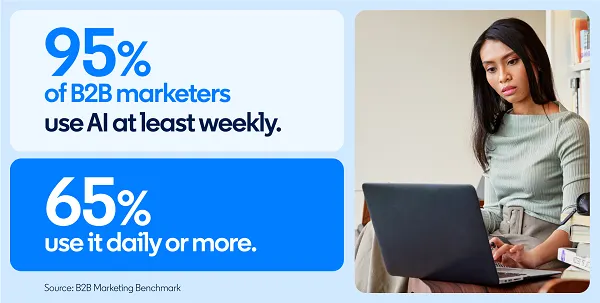
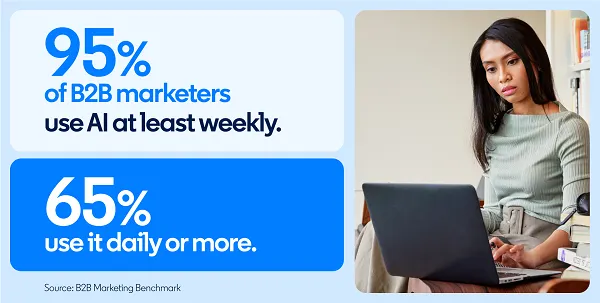
So, as you would expect, a lot of professionals are using AI in their day-to-day work, though many are still developing their usage.
As per LinkedIn: “Only 32% of respondents in our latest benchmark survey rated their expertise as ‘extremely good,’ remaining flat from last year’s report. Even leadership is at a deficit, with just 38% of CMOs saying they feel highly confident in their AI skills.”
This, LinkedIn says, underlines the need for more AI training, which it can facilitate through its LinkedIn Learning courses.
LinkedIn also lists the most common AI skills being added to member profiles:
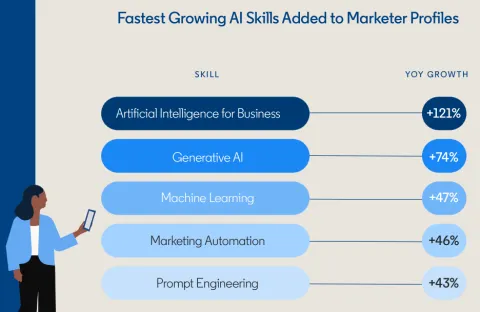
While it also notes how AI is improving its own ad targeting tools, through innovations like Buyer Groups, which uses AI to identify and target decision-makers involved in company purchasing, or Predictive Audiences, which analyzes engagements that take place in order to improve targeting impact.
But overall, it’s interesting to note the shifting analysis of AI, which is going from being the most transformative, most radical upheaval in history, to a more subdued view, based on growing business feedback, which suggests that while AI tools can indeed improve productivity, they can’t, in most cases, replace real human expertise and skill.
Are you finding that the latest wave of AI tools are significantly improving your professional productivity?
Again, for all the hype around generative AI, the survey reports have been mixed.
For example, a study conducted by Bain and Company suggests that while 95% of US companies are using generative AI, 29% of them are uncertain about its ROI. Another study published in The Economist found 42% of companies that had adopted AI tools have since abandoned them, while another, published by Harvard Business Review this week, found that AI tools don’t save time, but actually intensify employee workload, which can improve productivity, but also lead to burnout.
So while the bigger story we’re hearing is about the massive potential of AI tools to change the way that we live, and replace human workers with machines, in reality, the situation is more nuanced, and the absolute benefits of generative AI are not yet clear, nor how to effectively adopt these tools.
Essentially, AI tools are complementary, not replacive. Many CEOs have been wide-eyed with excitement, considering the cost savings they could make by replacing staff with AI tools, but in reality, AI tools are only truly effective, in their current iteration at least, when they are in the hands of someone who already knows the task in and out.
Those experts are then able to understand the outputs, see any errors in them, and refine the data into something useable. But the idea that AI tools can reliably do the work for you isn’t realistic. At least, not yet.
Source link