
If you consider yourself a fashion enthusiast, find yourself watching styling videos or save a post featuring an intriguing pair of shorts to look up later, the odds of you coming across “niche cool-girl” style videos are quite likely.
Fashion videos promising to expose viewers to “niche,” “underrated,” “cool-girl” brands have flooded the feeds and are gaining traction, particularly across Instagram and TikTok. They speak to a recent evolution away from those fleeting trends that require instant participation before dying at week’s end. Now, people are searching for a visually appealing style that speaks to them and offers a semblance of individuality. It’s for that reason that these “niche cool-girl brands” videos tend to do well and catch the eye of the fashion-curious.
Mia Jacobs, senior strategist for youth fashion at trend forecasting firm WGSN, believes “we’ve moved past the era of micro-trends and core aesthetics and entered a period of hyper-individuality, where the focus is on developing personal style.” She continues: “Niche is the new norm for Gen Z; they are prioritizing authenticity and ‘IYKYK’ (if you know, you know) culture to signal community and personal values.”
This video format is how Yagmur Tok found her digital footing. The writer-turned-creative strategist-turned-content creator began by focusing on “underrated Turkish cool-girl brands” to platform designers from her home country. After seeing how her audience responded, she expanded to other independent and vintage brands she deemed niche or underrated. “People are sick of shopping at the same five shitty places and buying the same things,” she tells Fashionista.
Being the subjects of these videos is quite an interesting experience, according to designers like Leeann Huang and Ella Mae, both owners of eponymous independent labels dubbed as “niche” or “cool girl” by voices on the internet.
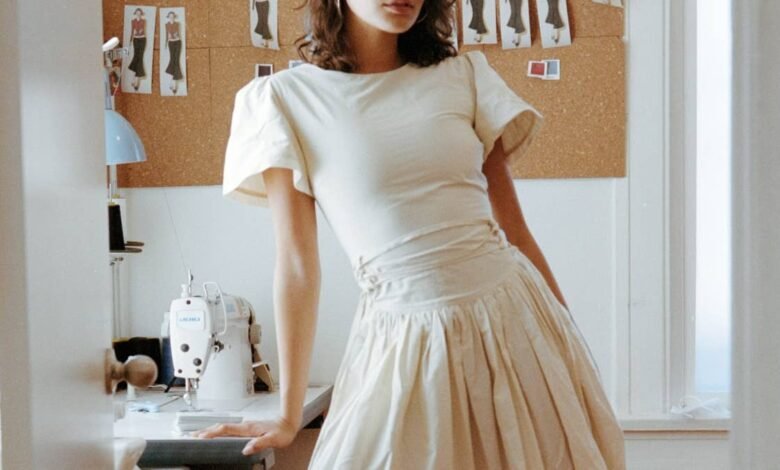
Mae tries to limit social media use in her personal life, but she’s quite familiar with it as a brand owner. She was introduced to this trend after being tagged in various videos of the sort. “Sustainable,” “L.A.-based,” and “whimsical” are the descriptors most commonly associated with her brand within the “cool-girl” umbrella. “I’m happy to be mentioned and included, and I do hope they’re genuinely helpful for people too, who are trying to find a shopping niche,” she says.
The videos she’s most thrilled to be featured in are the “sustainable” cool girl ones, as they affirm that people are thinking consciously about their shopping habits — “because then people are doing something good, even if it’s just for the sake of the trend,” she says.
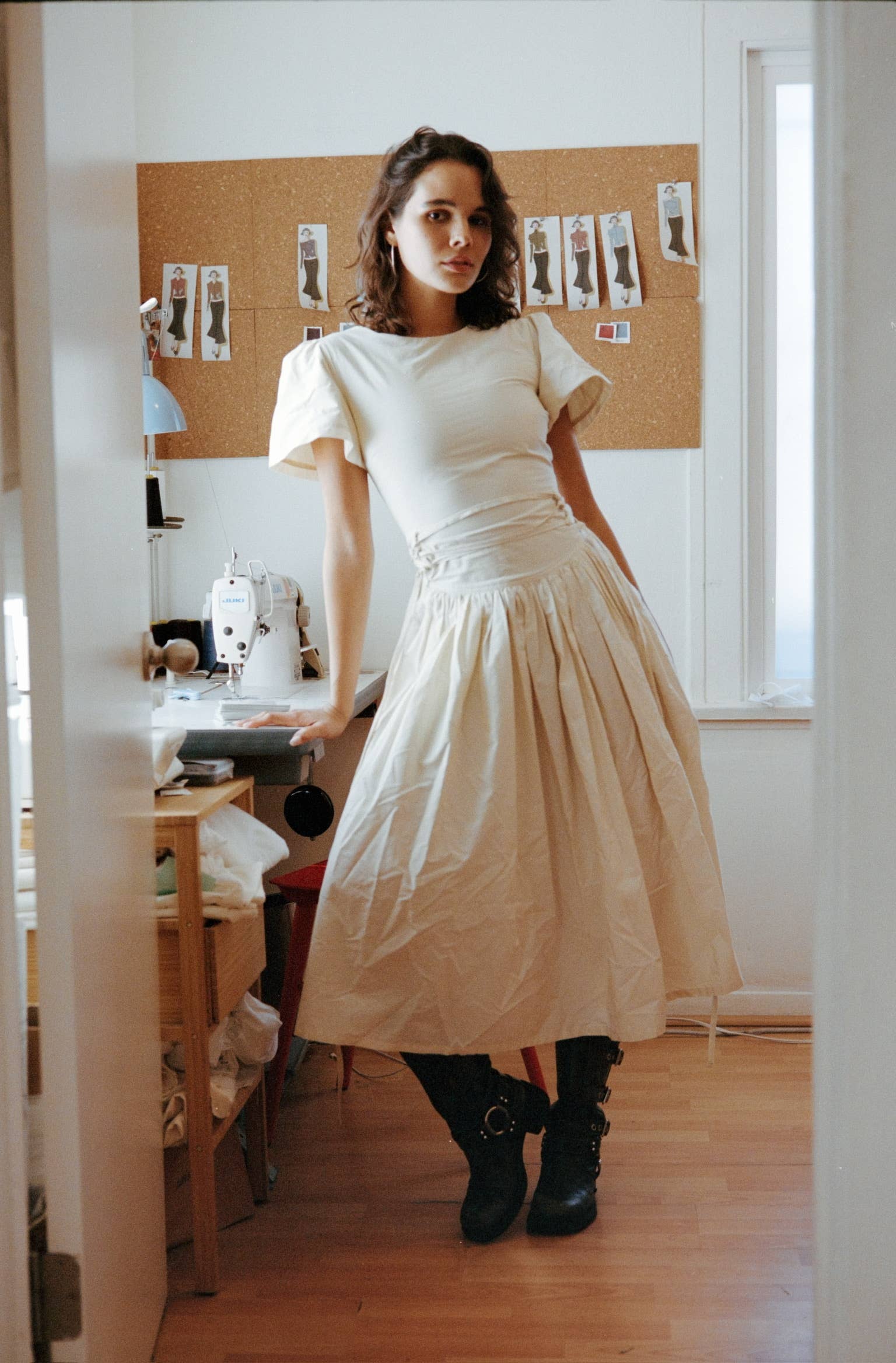
Photo: Ella Mae
Fellow Los Angeles-based designer Huang is used to seeing this type of content and believes it is in line with the rise of quicker, short-format information spreading. “People are hungry to learn these things, but it’s harder, attention span-wise, nowadays to have to read through an online article,” she says. “It’s fun when people learn about my brand, and it’s interesting to hear what they have to say. I do think they’re pushing me out to their audience, which is always helpful.”
When formatting this content, Tok aims to strike a balance between curation and education. Her goal is to people discover where to go for their particular interests and educating them on larger fashion topics — such as runway shows and trends — without explicitly telling them to “buy this outfit” or “wear this top.”
Tok and the designers see these curated videos as one solution to the overwhelm the digital sphere can invoke. With social feeds that can feel overpolluted, it can be helpful to have influencers do the research to uncover hidden gems, regardless of the subject. They also believe more consumers would shop at smaller brands if they knew where to find them. Tok says quite candidly, “Nobody knows what the hell they’re doing [including myself at times], and there’s so much pressure for women and a lot of noise from random people.”
As Mae adds, “the content machine never stops,” so having parameters to go off of — while still feeling a sense of autonomy to explore — can provide the relief many are searching for. “There’s an aspirational piece to the cool girl,” Tok says. “Like, ‘if I buy this, then I could be a better version of myself.’”
Examining consumer behaviors and desires further, Jacobs says the popularity of this trend points to three factors. First, “the online fashion community is shifting from passive consumption to more active curation, where the focus is on building a wardrobe that reflects authenticity and self-expression rather than rigid style rules,” she explains. Second, “consumers also want to be part of a designer’s journey or ‘fandom’ rather than just an end user, which leads to stronger brand affinity for independent labels.” And finally, “in an AI-saturated landscape, we’re seeing a renewed reverence for human craftsmanship and the transparency of slow fashion — knowing exactly who made your clothes is becoming a status symbol.”
Jacobs notes that trend forecasters are seeing the rise of “anti-algorithm dressing,” which rebukes generic styles primed for AI replication, as well as “low-consumption” and “de-influencing” trends that seek to promote “high-quality, versatile pieces with long-term appeal while also encouraging consumers to seek out unique items that set their wardrobes apart.” This marks a significant departure from the “buy now” content on the other side of these apps.
Tok shares that, both anecdotally and through direct numbers, she has seen her audience opt into shopping vintage brands and indie labels, as opposed to the familiar fast-fashion conglomerates.
When independent designers are featured in a viral “cool-girl” style video, they at the very least experience a boost in exposure. “I definitely think keywords like ‘this cool niche brand’ rings in people’s minds and gets their attention,” Huang says. While the higher price point of their slow-produced garments may lead to a slower customer buy-in, the exposure broadens their audience and eventually leads to more sales. Huang and Mae both confirm that there are specific pieces that continue to sell out due to this online virality. They have now become recognizable markers for their brands. (For example, the Monday dress in Ivory and Twisting Vines skirt for Ella Mae, and Fruit Sticker Bags or Blinking Eye skirts for Leeann Huang).
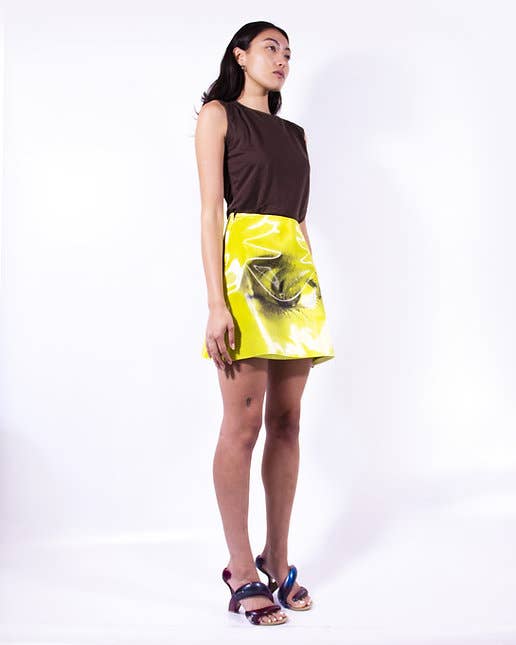
Photo: Courtesy of Leeann Huang
When Huang first released the Blinking Eye skirt, she knew she had something special, yet the units priced at $330 each weren’t selling. Then came the viral video showcasing how cool and unique they were, and she sold 35 skirts, leading to approximately three times the revenue from the month prior.
Seeing what resonates with content creators’ audiences, as well as their own organic ones, also allows designers to understand which audiences their work resonates with. For two SoCal-based independent brands, social media is the central avenue through which their designs are able to reach places such as New York, San Francisco, London, Japan and Australia. It has created opportunities that may not have been possible without the capital or foundation needed to weather the traditional, often gatekept fashion industry. While this expansion in consumer base can also be attributed to their own marketing efforts and traditional press, the sheer impact of social media is undeniable.
Tok is able to track the tangible effects her content has on brands through the ShopMy platform. Thousands of clicks, followers, sold-out items and hundreds of dollars in affiliate commission can be attributed to her highlighting a brand and linking it on the platform. To that point, she cannot stress enough how valuable she believes ShopMy can be for independent designers today.
“It’s awesome to uplift these designers,” she says. “I try to share Turkish designers, Palestinian designers, a lot of designers from the Middle East, Africa and Europe. I want to [uplift] point of view, quality and craft.”
There are limitations to these types of videos, however, which makes Tok feel conflicted at times. The price point for one can be a deterrent to her audience, who may either experience economic constraints or, due to fast fashion, are now woefully unaware of the true price of ethical clothing production. Secondly, and more conflicting, is the limited sizing many, but particularly vintage niche brands, carry.
Huang highlights how difficult — and often deal-breaking — it can be for brand owners who cannot quite grasp the concept of “always-on” social media culture. Meanwhile, Mae shares that establishing legitimacy amid the online noise can be a challenge. Though social media provides an equal platform, it can blur the lines between established businesses and DIY creators, prompting consumers to believe they can replicate designs rather than invest in the brands themselves. “Do you sell the patterns for this? I want to make my own,” is a real question Mae receives regarding her designs.
In a similar vein, social virality can make independent designers more susceptible to fast-fashion dupes; while dupes affect brands at all levels, they can be especially damaging to smaller designers that lack the notoriety, support or investment of larger luxury labels.
“It’s a delicate balance,” Jacobs notes. “Viral exposure can create a sudden surge in orders that can overwhelm a small brand’s infrastructure, manufacturing capabilities or stock levels, and can be even more challenging depending on the brand’s geographical location.”
While supporting independent brands takes a multi-tiered approach, all parties agree there is a growing desire for fashion with a more personal touch, and “cool-girl” branding may just be the clever marketing angle needed to carry this shift forward.